

As building facade materials evolve, safety, health, and durability have become key benchmarks of quality. Soft porcelain, as a new eco-friendly facade material, is widely used. However, the market is flooded with imitations of varying quality. Some inferior fakes disguise themselves as genuine products, posing hidden safety and health risks. This article explains the core differences between authentic and fake soft porcelain and provides actionable identification methods to help you avoid purchasing risks.
01 Core Difference: The “Inner Kernel” Sets Them Apart
The essential difference between genuine soft porcelain and imitations lies in the technical approach and the rigor of quality management. Although fakes may look somewhat similar to authentic soft porcelain, their technical route relies on chemical adhesives for forming – a “high-content chemical adhesive + simple processing” model. As a result, their performance differs vastly from genuine products. This is the key to identification.
02 Fake Soft Porcelain: Two Types, Significant Risks
Fake soft porcelain on the market falls into two main categories: low-end imitations and highly deceptive imitations. Both follow the “high-content chemical adhesive + simple processing” model, lacking safety, durability, and reliability, with prominent long-term risks.
Low-End Imitations
Made with low-grade chemical adhesives as the binder, mixed with quartz sand and other powders to form a paste, then baked in silicone molds – produced in small workshops.
Thin, soft like a plastic sheet, lacking stiffness; UV-printed surface textures have an irritating smell and fade easily outdoors.
Non-breathable; after installation, trapped moisture causes blistering, damaging the finish.
Low-end imitations tend to blister due to trapped moisture after installation
Highly Deceptive Imitations
Use slightly better adhesives, with added calcium carbonate, quartz sand, cement, and other components – produced by small factories or outsourced to other small factories.
Reduced plastic-sheet feel and some breathability, making them difficult to distinguish by eye. However, performance differs greatly from genuine products.

Poor-quality soft porcelain used outdoors shows delamination from the backing mesh under rain and UV exposure
Key Risks of Imitations
1. Poor Fire Performance
Due to their high content of chemical adhesives, both types have a fatal defect: they self-ignite within 2 minutes of flame contact, releasing pungent glue fumes, large amounts of black smoke, and harmful gases.
| Soft porcelain purchased on Taobao | Genuine soft porcelain from a leading brand |
|---|---|
| Self-ignites; flame does not extinguish; pungent glue smell | Does not burn within 2 minutes; only carbonizes; self-extinguishes; very little smoke |
2. Poor Durability and Environmental Safety
Reliance on large amounts of adhesives leads to fading and chalking under long-term outdoor UV exposure.
If low-grade adhesives are used indoors, they continuously release harmful gases such as formaldehyde, benzene, toluene, xylene, TVOC, as well as ammonia, halogenated hydrocarbons, isocyanates, etc.
3. Poor Quality Stability
Simple processing results in unstable quality and low precision: uneven thickness, large tolerances, edge curling, corner lifting, blistering, rough seam and corner treatments. Hidden issues include performance degradation over time without rigorous testing.
03 Genuine Soft Porcelain: Natural Core, Excellent Quality
Genuine soft porcelain uses bio-based eco-friendly modifiers. Its core technology is Econiclay (modified inorganic powder) – consisting of >95% natural inorganic minerals with <5% bio-based eco-friendly modifiers, synthesized via hybrid technology to obtain active Econiclay. This is its foundation.
Strict production process: High-precision lasers replicate natural textures onto metal molds; Econiclay raw material is automatically laid and pressed into shape – highly automated, with quality control according to ISO9001, avoiding rough workmanship.
Surface finishing: High-precision ceramic inkjet printing + inorganic mineral inks, cured at >200°C, with aging resistance >4,000 hours and service life >50 years.
Rigorous testing: Genuine soft porcelain passes global tests for aging resistance, fire resistance, salt spray resistance, freeze-thaw resistance, ensuring stability under harsh conditions across different regions.
Low carbon footprint: Certified by international authorities, carbon emissions ≤1.04 kg CO₂e per square meter, meeting Chinese and global low-carbon & ESG requirements – something fakes cannot match.
04 Practical Guide: 5 Steps to Identify Authentic vs. Fake Soft Porcelain – Usable by Beginners
Based on real purchasing scenarios, here are 5 identification methods requiring no special tools, helping you quickly distinguish genuine from fake and avoid pitfalls.
Step 1: Check Appearance & Texture – Assess Stiffness
Genuine Soft Porcelain
Flexible yet not limp; stiff and structured; uniform and standard thickness.
Fine textures, soft colors, no plastic or glue-like feel.
Patterns deeply embedded, layers clear, details full.
4.0 soft porcelain: dimensional tolerance ±0.3mm; weight per piece highly consistent for same specification and texture.
3.0 soft porcelain: dimensional tolerance ±0.5mm; weight per piece basically consistent.
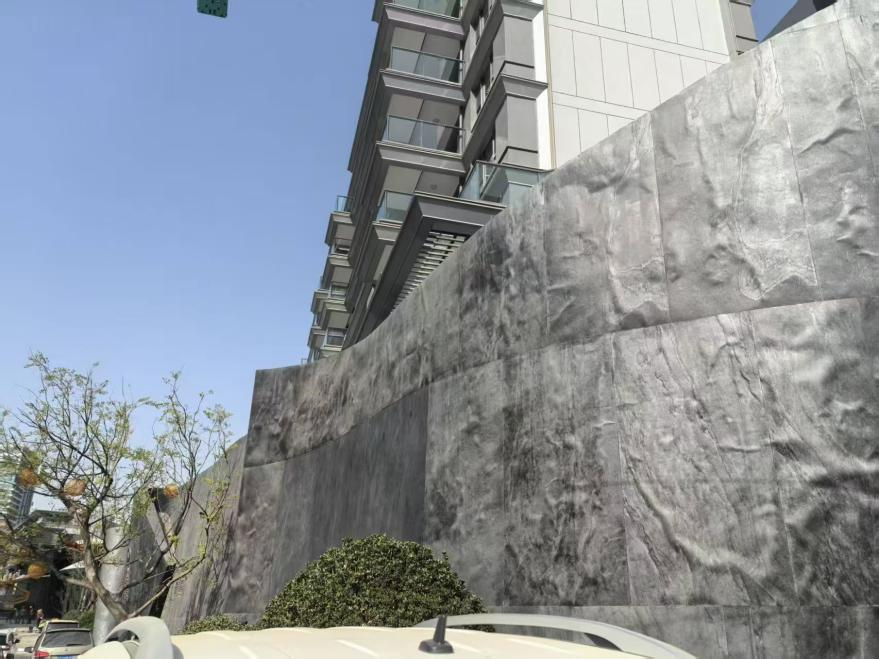
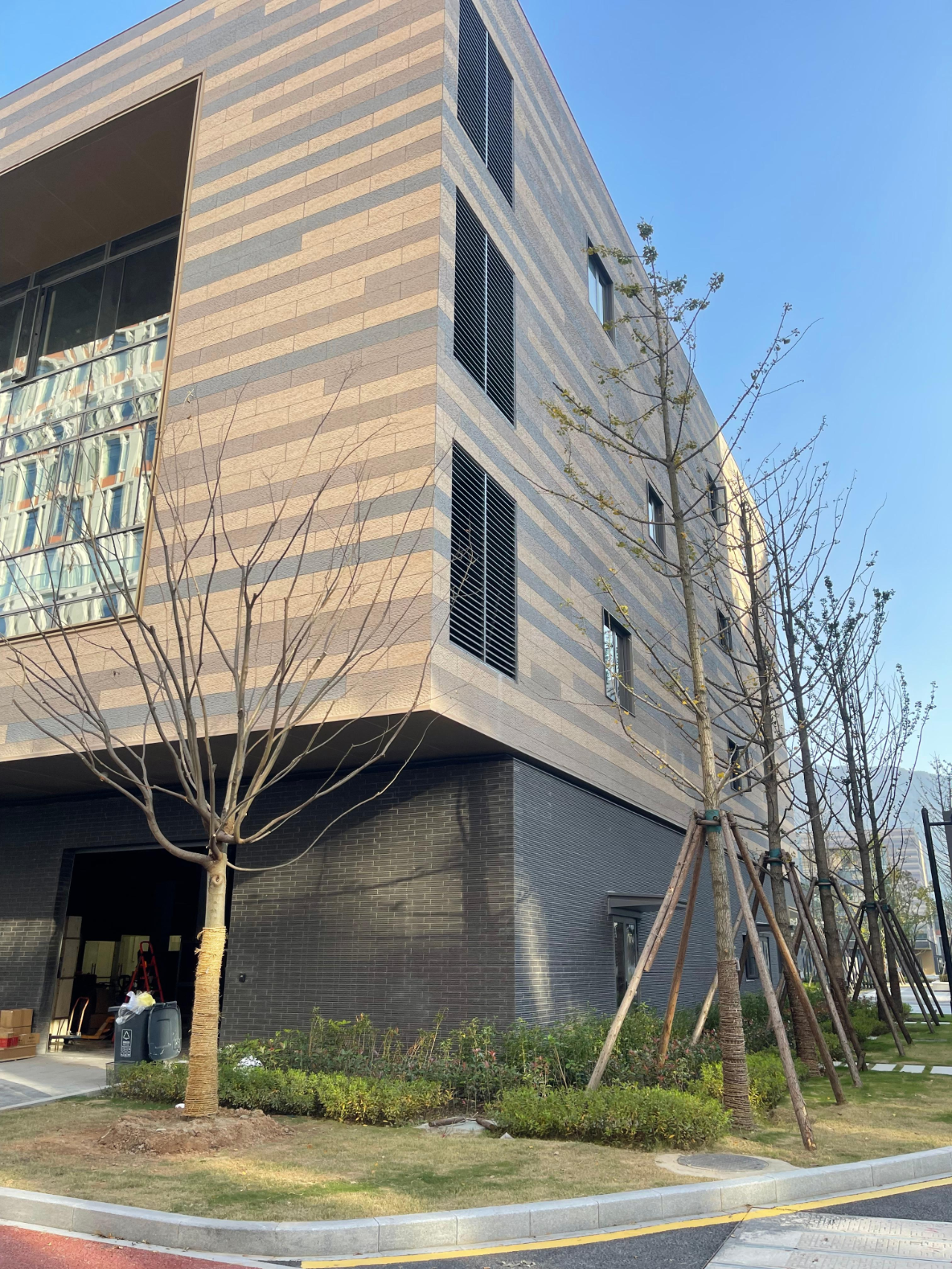
Hangzhou Zhongneng Energy Saving Industrial Park – soft porcelain well received
Xiamen University – exterior wall decorated with soft porcelain
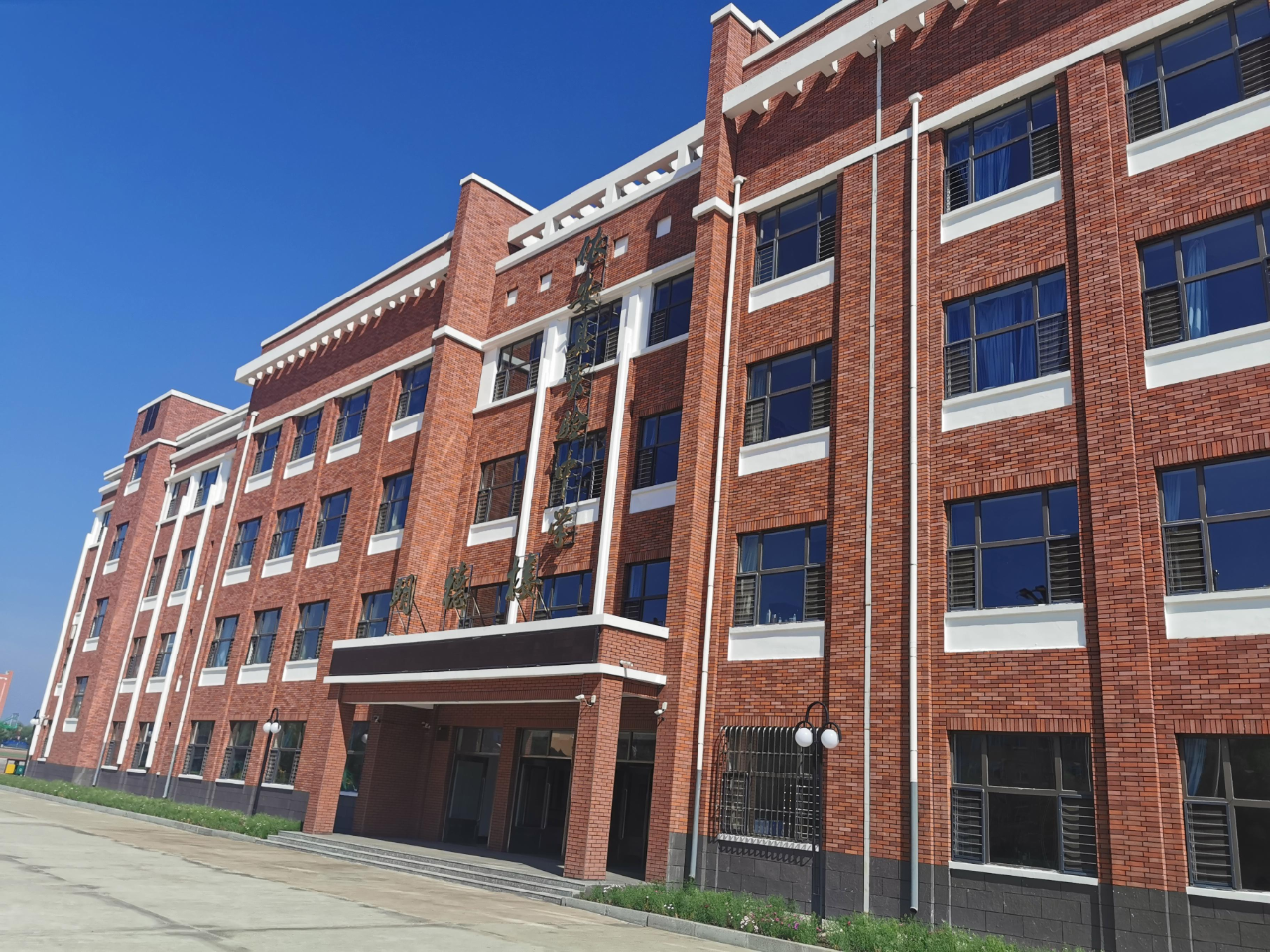
Yian Middle School, Qiqihar – exterior wall with 4.0 soft porcelain
Fake Soft Porcelain
Low-end imitations: soft like a plastic sheet, no stiffness. Highly deceptive imitations: slight plastic or glue feel.
Surfaces mostly UV or small inkjet printing – blurred patterns, harsh colors, fading under sunlight.
Cement-based fakes: immersion in water for 24 hours causes whitening on the submerged side – a direct indicator.
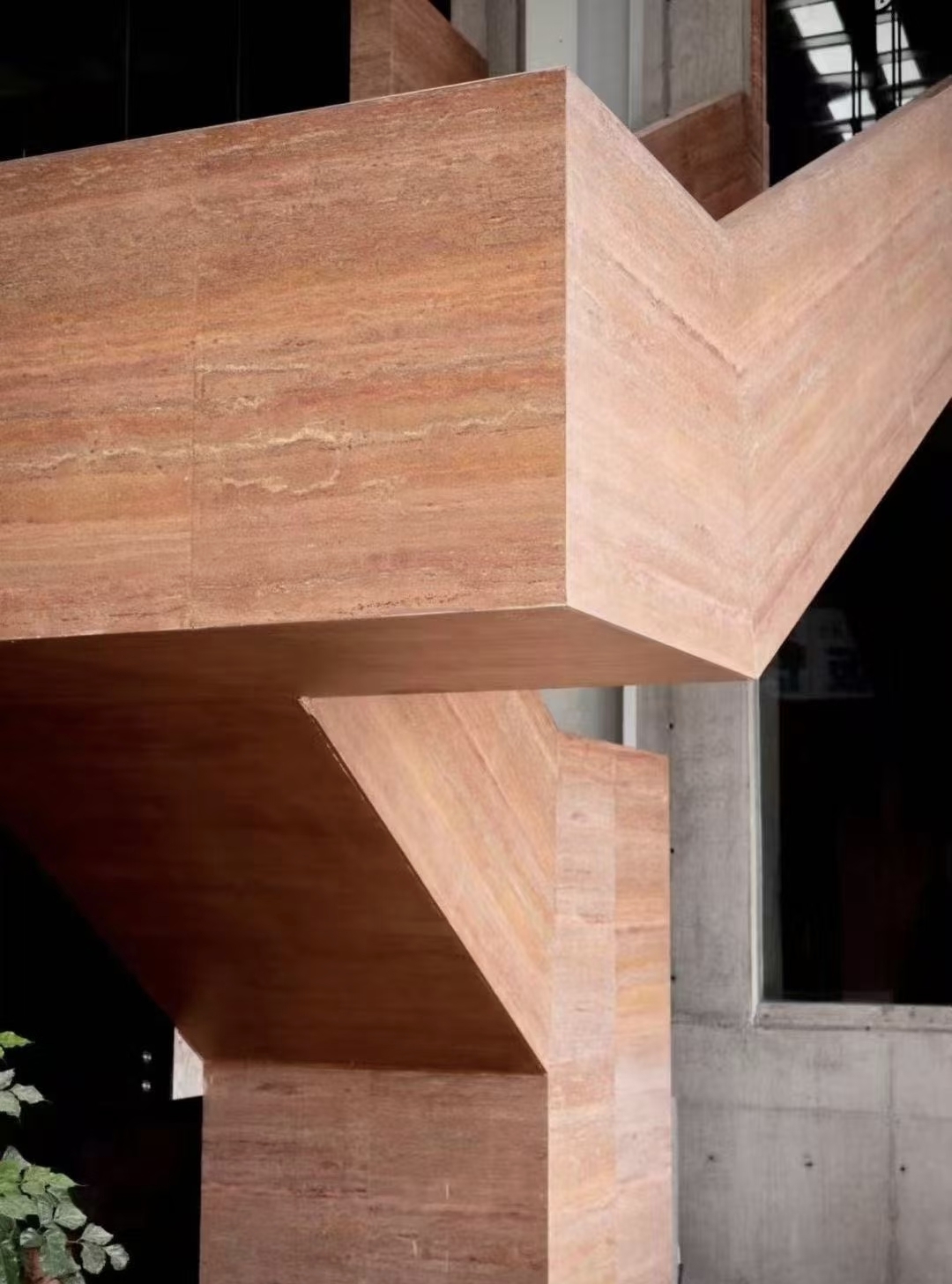
Flat products (e.g., travertine style) uneven thickness, diagonal tolerance ≥ ±1mm, inconsistent weight per piece for same specification.
Step 2: Smell Test – Judge Material Environmental Safety
Genuine Soft Porcelain
No pungent smell at room temperature, when heated, or in enclosed spaces – only a faint earthy or mineral odor from natural materials.
Fake Soft Porcelain
Pungent glue smell at room temperature or upon opening the box; obvious ink smell for UV-printed types. When heated, the glue smell intensifies, even releasing an acrid plastic odor – immediate sign of fakes.
Step 3: Fire Test – Judge Safety
The fire test is a core identification method, with clear differences directly related to building safety.
Genuine Soft Porcelain
Does not burn within 2 minutes of flame contact; only carbonizes; self-extinguishes after flame is removed; no re-ignition or spread.
3.0 version: fire rating A2; 4.0 version: fire rating A1.
When burning, only a faint straw-like (bio-based) odor; little smoke, no harmful gases – meets public building fire safety standards.
Fake Soft Porcelain
Self-ignites within 2 minutes, with black smoke and pungent glue smell; burning residue is glue-like or powdery.
Fire rating only B, C, or barely A2; cannot pass A1 testing – does not meet fire safety requirements for public buildings.
Step 4: Verify Product Compliance
Genuine Soft Porcelain
Manufacturers provide complete documentation, including type test reports, A-grade fire test reports, carbon footprint verification reports, and international certifications (EU, US, etc.). Data can be verified on official websites.
Fake Soft Porcelain
Most lack type test reports, or only provide non-representative sample test reports. Some reports are forged or tampered with, unverifiable. No international environmental certifications; fails environmental standards.
05 Choose Genuine Soft Porcelain for Safe, Healthy, Low-Carbon Spaces
The development of the soft porcelain industry stems from the pursuit of safety, health, and low-carbon. The gap between authentic and fake lies in performance differences caused by distinct raw materials and processes.
Genuine soft porcelain: no glue smell when burned; stiff; complete certifications; low-carbon.
Fake soft porcelain: pungent glue smell; poor fire performance; no legitimate certifications.
By mastering the above methods, you can accurately select high-quality soft porcelain. Soft porcelain is not just a facade material – it is a quality promise of new building materials, combining aesthetics and safety with natural materials, and aligning with the needs of a low-carbon era, safeguarding the safety and freshness of every space.